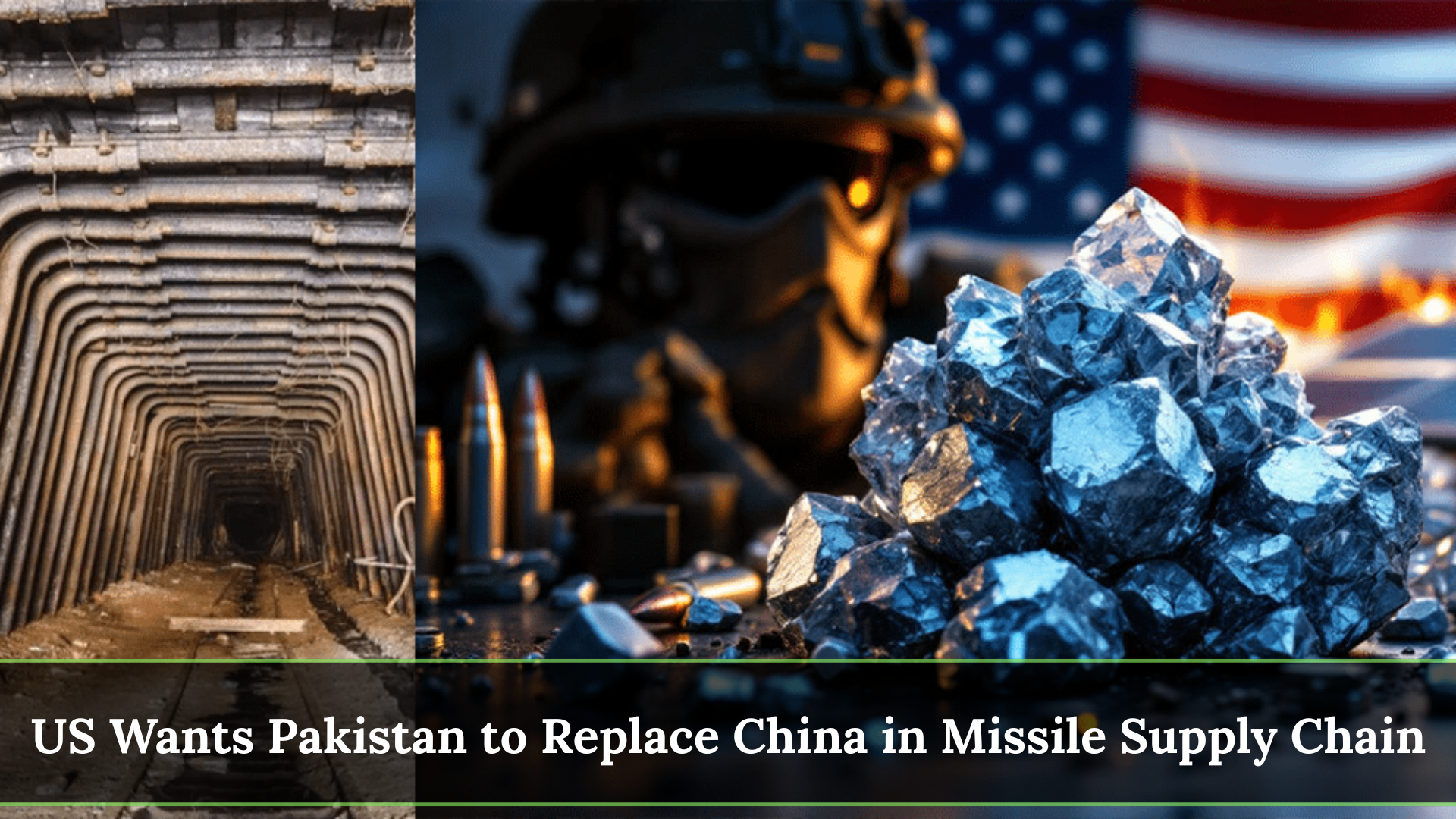

US Wants Pakistan to Replace China in Missile Supply Chain. Pakistan is gaining attention as a potential alternative supplier of critical minerals, particularly antimony, for the United States’ defense and technology industries. This comes amid the US’s efforts to reduce reliance on China-dominated supply chains, especially in the aerospace, defense, and technology sectors.
Rising Importance of Antimony
Antimony is a vital mineral used in missiles, batteries, and flame retardants. According to the Financial Times, US buyers are keen to secure supplies from countries outside China. The price of antimony trioxide has surged dramatically, reaching around $40,000 per ton, compared to roughly $26,000 per ton in September 2024. This price spike underscores the growing demand and strategic significance of the mineral globally.

Pakistan’s Role in Critical Minerals
Currently, Pakistan produces a small volume of antimony and holds about 1% of global reserves, as reported by the US Geological Survey. Despite being a minor producer, the country has attracted growing interest from US buyers. Companies such as Himalayan Earth Exploration, based in Pakistan, are seeing increasing demand from American firms looking to source antimony directly.

Intermediaries have even proposed the construction of a dedicated terminal in Pakistan to ship antimony directly to the United States, highlighting the strategic importance of the region. Additionally, the US firm Strategic Metals has agreed to collaborate with Pakistan to secure critical minerals for defense, aerospace, and technology industries.

Challenges in Pakistan’s Supply Chain
Despite rising interest, Pakistan remains at the lower end of the antimony value chain. Most of the antimony is extracted through small-scale mining operations with minimal local refining or processing. This results in raw material often being exported at prices significantly below international market levels.

China continues to dominate antimony processing and smelting, with only a few facilities outside China capable of processing the mineral at scale. Pakistan’s limited refining capacity means it cannot yet fully capitalize on its reserves.

Another issue is traceability. Reports indicate that some antimony marketed as Pakistani is actually mined in Afghanistan and transported across the border informally. This raises concerns over supply chain reliability and authenticity.
Global Market Outlook
Although antimony prices have recently eased due to new supply from Southeast Asia and the exploration of alternative materials, US interest in Pakistan remains high. Analysts see Pakistan as a strategic partner in diversifying the supply chain away from China, particularly for defense-related applications.
The emerging interest signals a long-term opportunity for Pakistan to upgrade its mining infrastructure, invest in processing facilities, and position itself as a reliable supplier of critical minerals in the global market.
Conclusion
Pakistan’s emerging role in antimony production presents a strategic opportunity for the US to reduce dependence on China in critical mineral supply chains. While challenges like limited processing and traceability remain, investment in infrastructure and refining could position Pakistan as a reliable global supplier for defense, aerospace, and technology industries.