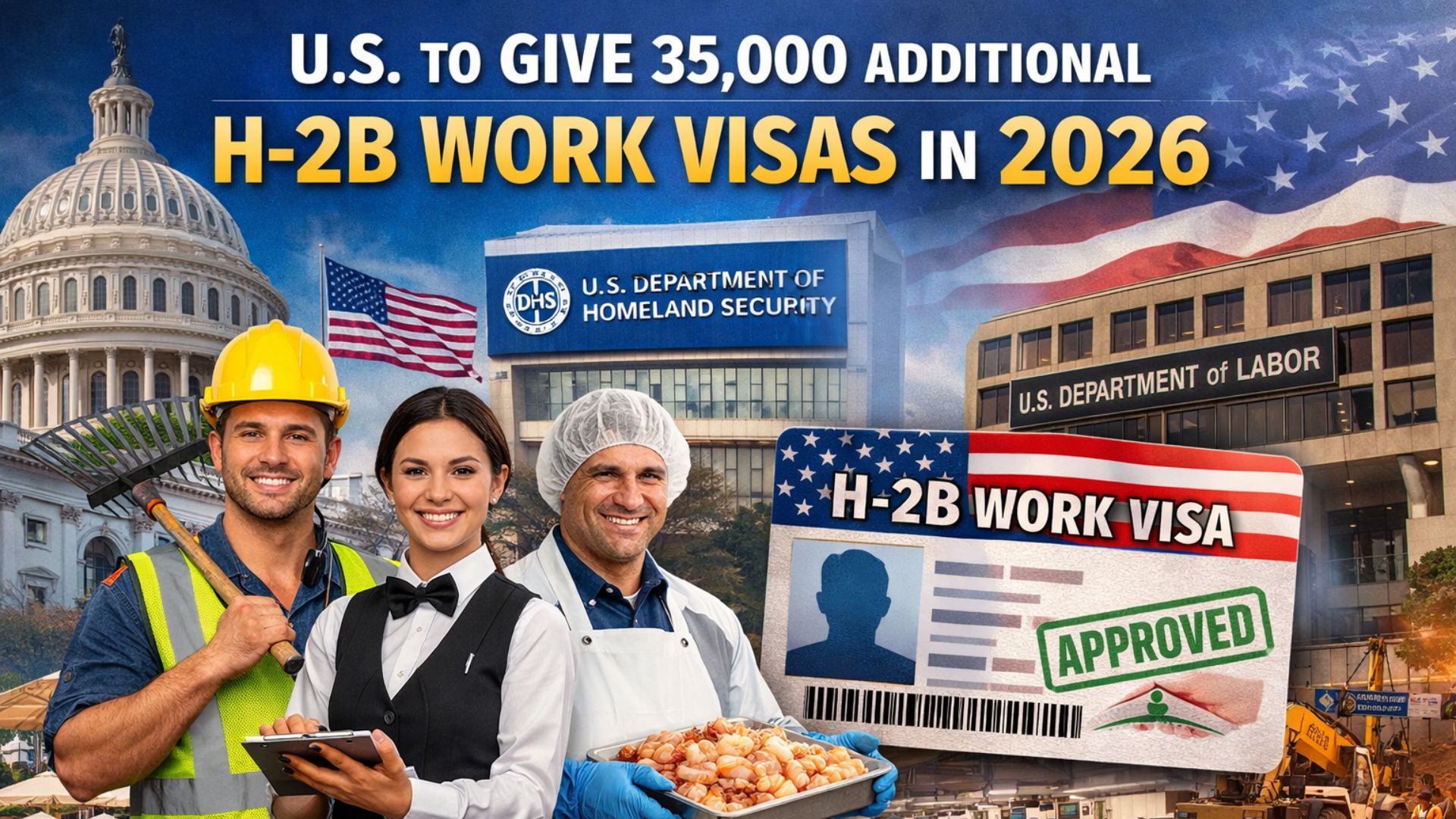

US to Give 35,000 Additional H-2B Work Visas in 2026. The United States has announced a new allocation of 35,000 additional H-2B temporary work visas for fiscal year 2026. The decision was jointly confirmed by the Department of Homeland Security and the Department of Labor to support American employers struggling with seasonal labor shortages.
These extra visas will supplement the standard annual cap of 66,000 H-2B visas, offering limited relief to industries that rely heavily on temporary foreign workers. However, compared to previous years, the 2026 increase is noticeably smaller and has already raised concerns among employers and labor advocates.
US Expands H-2B Visa Cap for 2026
Under the new plan, the 35,000 supplemental visas will be issued in addition to the regular quota. This brings the total potential number of H-2B visas for 2026 to 101,000, provided all supplemental slots are used.
While the move signals continued government support for seasonal industries, it also reflects a more cautious approach. Between 2023 and 2025, the US released a much larger number of additional H-2B visas each year. The 2026 figure represents nearly a 50 percent reduction, making it the smallest expansion in recent years.
This shift has triggered concern among businesses that depend on foreign labor during peak seasons.
Why the H-2B Visa Program Matters
The H-2B Visa allows US employers to hire foreign nationals for temporary, non-agricultural jobs when American workers are unavailable.

These jobs are usually:
- Seasonal
- Peak-load
- Intermittent
- One-time occurrences
The program is especially important for industries that experience sharp increases in labor demand at specific times of the year.
Industries That Rely on H-2B Workers
H-2B workers play a critical role in keeping several US industries operational, including:
- Hospitality and tourism
- Hotels, resorts, and restaurants
- Landscaping and grounds maintenance
- Seafood and food processing
- Forestry and conservation work
- Construction support services
- Amusement parks
- Manufacturing and logistics
Without access to H-2B workers, many employers report reduced operations, service disruptions, and financial losses.
Priority Sectors for the 2026 Additional Visas
According to DHS and DOL, the 35,000 additional visas in 2026 will prioritize industries considered essential to seasonal economic activity.

Key Priority Sectors
- Seafood and food processing
- Forestry and environmental services
- Hospitality and tourism
- Transportation and logistics support
- Manufacturing
Because the number of extra visas is limited, competition is expected to be intense, especially during peak filing periods.
Comparison With Previous Years
From 2023 to 2025, the US government issued significantly more supplemental H-2B visas to help industries recover from labor disruptions.
In contrast:
- 2026 allocation is sharply reduced
- Employers will face stricter competition
- Filing timelines will become more critical
Many industry groups argue that the reduced number does not match current labor market demands, particularly in tourism-heavy states.
Impact on US Employers
Despite the additional visas, employers warn that the lower allocation could still lead to serious challenges.

Key Concerns for Employers
- Labor shortages during peak seasons
- Tighter application deadlines
- Increased uncertainty in workforce planning
- Higher operational costs
- Risk of reduced services
Small and mid-sized businesses are expected to feel the impact most, as they often lack alternative labor options.
Impact on Foreign Workers
For foreign workers, the 2026 decision means fewer opportunities and tougher competition.
What This Means for Workers
- Limited visa availability
- Higher demand for early applications
- Stricter employer selection
- Increased reliance on approved recruiters
Workers who previously relied on repeat H-2B employment may find it harder to secure placements.
H-2B Visa Eligibility Rules
Only nationals from DHS-approved countries are eligible to participate in the H-2B program.
Some Eligible Countries Include
- Mexico
- Jamaica
- Philippines
- Thailand
- United Kingdom
- Japan
- Brazil
Countries Still Excluded
- India
- China
- Several African and Middle Eastern countries
Eligibility lists are reviewed annually and can change based on diplomatic and labor considerations.

Employer-Sponsored and Time-Limited Program
The H-2B visa is:
- Employer-sponsored
- Issued for a limited duration
- Non-immigrant in nature
Once employment ends, workers must return to their home country unless they secure a lawful extension or change of status.
The visa does not lead directly to permanent residency.
Why the US Reduced the 2026 Allocation
Officials have not provided a single reason for the reduction, but experts point to several factors:
- Domestic labor market adjustments
- Political pressure on immigration limits
- Administrative capacity concerns
- Increased focus on local hiring
Despite this, DHS has emphasized that the program remains a vital tool for economic stability.

Outlook for the 2026 H-2B Program
The H-2B program will continue to play a crucial role in supporting US seasonal industries, even with fewer additional visas.
What Employers Should Do
- Start recruitment early
- Prepare applications well in advance
- Monitor DHS and DOL announcements
- Work with compliant recruiters
What Workers Should Do
- Apply early through legitimate employers
- Avoid unregistered agents
- Track eligibility updates
- Prepare documentation in advance
Early planning will be essential for success in 2026.
Conclusion
The decision by the United States to issue 35,000 additional H-2B work visas in 2026 offers limited relief but signals a tighter approach compared to previous years. While the move supports key industries, the reduced allocation is likely to intensify competition for both employers and foreign workers.
As demand for seasonal labor continues, the effectiveness of the H-2B program will depend on timely applications, transparent processes, and ongoing policy adjustments.