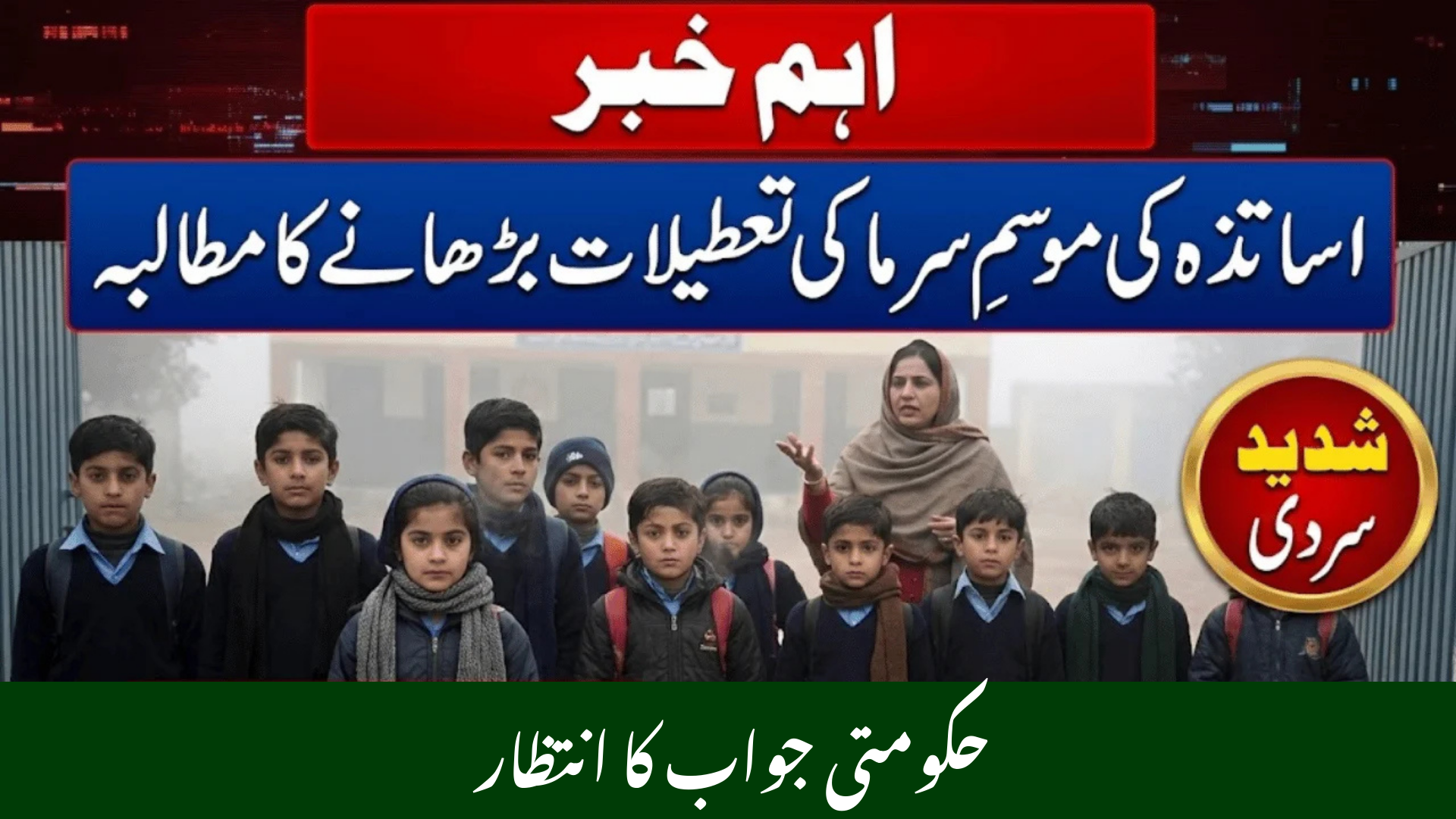

Teachers Demand Extension in Winter Holidays. Teachers across Punjab are urging the government to extend winter holidays for primary school students due to the ongoing severe cold wave. The demand comes amid growing concerns about children’s health, school attendance, and the risk of cold-related illnesses. According to education stakeholders, the current weather conditions are not suitable for young children to return to classrooms safely.
The call for extended holidays has been formally raised by the Punjab Teachers’ Union, which believes immediate action is necessary to protect students and avoid preventable health emergencies during peak winter.
Why Teachers Are Demanding More Winter Holidays
Punjab has been experiencing intense cold, fog, and freezing mornings, especially in northern and central districts. Primary school children are the most affected, as many schools lack adequate heating facilities. Teachers argue that continuing classes in such conditions exposes students to serious health risks.
According to the union, extending winter holidays by at least ten days would help reduce illness among children while allowing schools to resume normally once temperatures stabilize.
Health Risks for Primary School Children
The primary concern raised by teachers is the health of young students. Children aged 4 to 10 are more vulnerable to cold-related illnesses because their immune systems are still developing.

The General Secretary of the Punjab Teachers’ Union, Rana Liaquat Ali, warned that extreme cold significantly increases the risk of diseases such as pneumonia, flu, throat infections, and respiratory complications.
Medical experts often recommend minimizing outdoor exposure for children during severe cold spells. However, many students travel long distances to school early in the morning, often without proper winter clothing, which further increases health risks.
Teachers Call for Child-Centered Decision Making
Teachers believe that education policies should prioritize student safety over rigid academic schedules. Rana Liaquat Ali emphasized that the government must take a child-centered approach and make decisions based on real ground conditions rather than fixed calendars.
He stated that extending winter holidays would not disrupt education in the long term. Instead, it would prevent prolonged absences caused by illness, which ultimately affects learning outcomes more severely.

Impact of Cold Weather on School Attendance
Cold weather has already started affecting attendance in many government schools across Punjab. Teachers report that a large number of students are missing classes due to fever, cough, and cold-related symptoms.
In rural areas, the situation is even more challenging. Many schools operate in old buildings with poor insulation. In some cases, students sit in classrooms without heaters, making it difficult to concentrate or stay warm during lessons.
Low attendance also puts pressure on teachers, who struggle to maintain lesson continuity when a significant portion of the class is absent.
Educational Disruption vs Health Protection
While some argue that extending holidays could delay the academic calendar, teachers insist that health protection must come first. Short-term academic delays can be managed through adjusted schedules, extra classes, or revised lesson plans.

However, widespread illness among students can lead to longer disruptions, increased healthcare costs for families, and emotional stress for children. Teachers believe that proactive holiday extension is a practical solution to avoid these issues.
Weather Conditions Across Punjab
Several districts in Punjab have recorded near-freezing temperatures during early morning hours. Dense fog has also affected visibility, making travel unsafe for children commuting to school.
Urban centers like Lahore, Rawalpindi, and Faisalabad, as well as colder regions in northern Punjab, have seen prolonged cold spells. Teachers argue that reopening schools under such conditions is risky, especially for younger students.
Government’s Role and Expectations
The Punjab Teachers’ Union has urged the Punjab government to review weather forecasts and consult health and education experts before making a final decision. Teachers expect authorities to act swiftly and announce an extension to avoid confusion among parents and schools.

Clear communication from the government is also essential. Delayed decisions often lead to uncertainty, with some parents sending children to school while others keep them at home due to health concerns.
Parents Support Teachers’ Demand
Many parents have expressed support for extending winter holidays. Families worry about sending young children to school in freezing temperatures, especially when schools lack proper heating.
Parents also point out the increased financial burden of medical treatment when children fall sick frequently during winter. From their perspective, preventive measures such as holiday extensions are more effective than reactive healthcare.
Possible Solutions Suggested by Teachers
Teachers have suggested multiple options for the government:

- Extend winter holidays by at least ten days
- Delay school timings during extreme cold
- Ensure heating facilities in classrooms
- Allow temporary online learning for older students
However, for primary-level students, teachers believe a complete holiday extension is the safest and most practical option.
Conclusion
The demand to extend winter holidays reflects growing concern for student health across Punjab. With severe cold weather continuing, teachers argue that protecting children from illness should be the top priority. The Punjab Teachers’ Union, led by Rana Liaquat Ali, has made it clear that timely action can prevent health risks while minimizing long-term educational disruption.