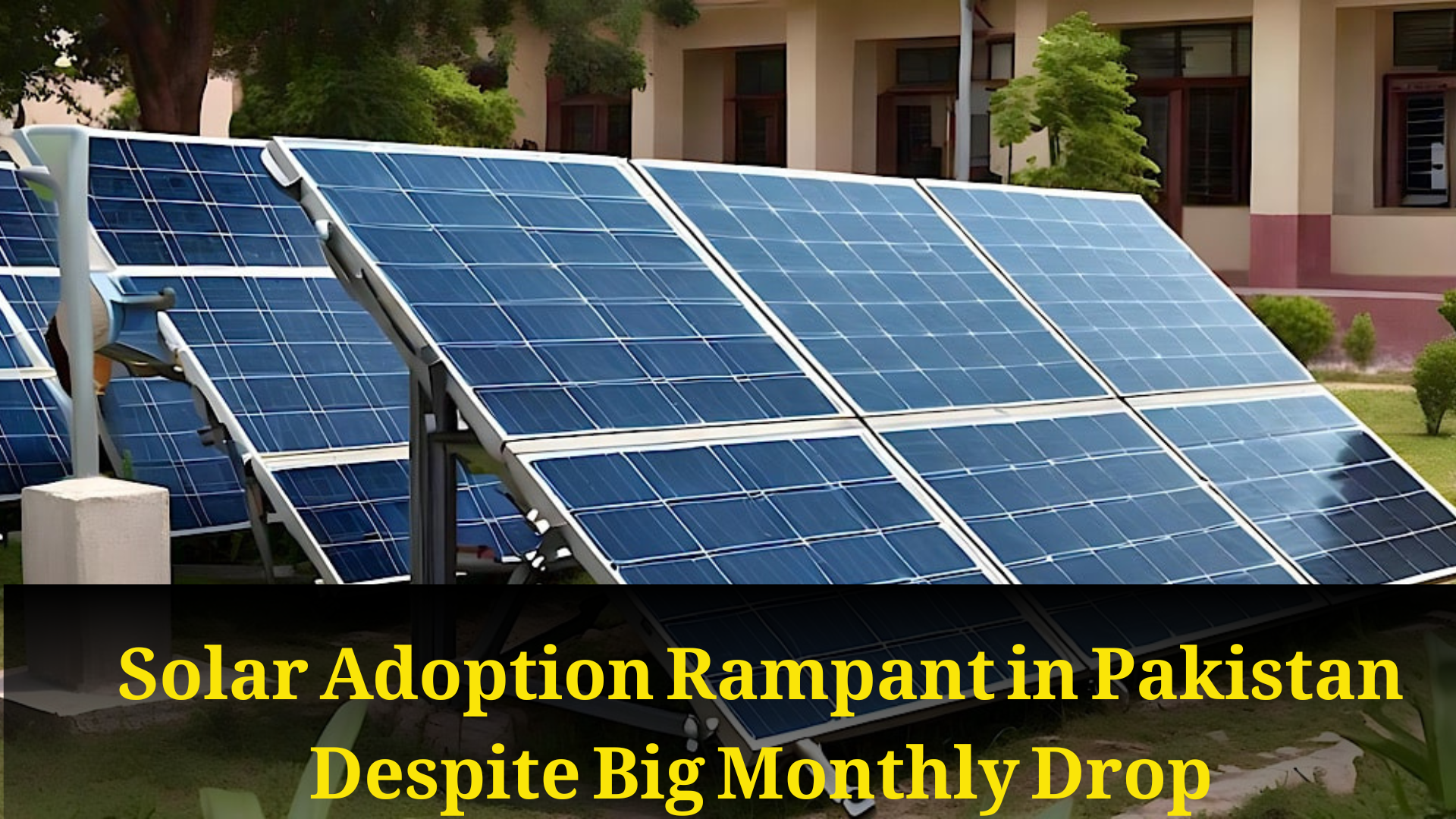

Solar Adoption Rampant in Pakistan Despite Big Monthly Drop. Pakistan shift toward renewable energy continues to gain momentum as solar adoption remains strong, even though the country witnessed a significant month-on-month decline in net metering units. Recent power sector data highlights an encouraging long-term trend toward solar energy, driven by rising electricity costs, energy security concerns, and growing awareness of clean power solutions.
Despite a noticeable dip in 2026, experts believe solar power will continue to play a critical role in reshaping Pakistan’s energy landscape in the coming years.
Net Metering Share Grows Despite Monthly Decline
One of the most notable developments in Pakistan’s power sector is the continued rise in net metering’s share of total electricity generation.
According to recent data, net metering’s contribution increased by 127 basis points on a year-on-year (YoY) basis in November 2025. This growth reflects a structural shift toward solar energy, with more households and businesses installing rooftop solar systems to reduce dependence on the national grid.
This increase in YoY share clearly indicates that solar adoption in Pakistan is not a temporary trend, but a long-term transformation driven by economic and energy realities.

Solar Net Metering Units Fall 10.5% in 2026
While long-term indicators remain positive, short-term data shows a decline in solar net metering activity.
On a month-on-month (MoM) basis, solar net metering units fell by 10.5 percent in 2026 compared to October. The same 10.5 percent decline was recorded across Pakistan, confirming a nationwide slowdown during the month.
Industry analysts suggest that such monthly fluctuations are common and can be influenced by factors such as:
- Seasonal installation cycles
- Import delays of solar equipment
- Policy or regulatory adjustments
- Market saturation in certain urban areas
Despite this decline, experts emphasize that monthly drops do not undermine the broader upward trend in solar adoption.

Overall Power Generation Remains Stable
Data compiled by Arif Habib Limited (AHL) shows that overall power generation in Pakistan remained largely stable, recording a 0.2 percent year-on-year increase in November 2025.
This stability suggests that solar energy is increasingly compensating for fluctuations in conventional power sources, helping maintain consistent electricity supply levels.
It is important to note that this data does not include consumers of K-Electric, meaning actual nationwide generation trends could be even stronger when Karachi’s utility is factored in.
Why Solar Adoption Continues to Rise in Pakistan
Despite the monthly dip in net metering units, Pakistan’s solar sector continues to expand due to several compelling reasons:
1. Rising Grid Electricity Costs
Escalating electricity tariffs have pushed households and businesses to seek cost-effective alternatives, making solar energy an attractive solution.
2. Reduced Dependence on the National Grid
Solar systems allow consumers to generate their own electricity, offering protection against load shedding and grid instability.
3. Net Metering Incentives
Pakistan’s net metering framework enables consumers to sell excess electricity back to the grid, improving the financial viability of solar investments.
4. Growing Awareness of Clean Energy
Environmental concerns and sustainability goals are encouraging a shift toward renewable energy solutions.

NEPRA Forecasts Power Demand Growth in 2026
Looking ahead, the National Electric Power Regulatory Authority (NEPRA) expects power demand to grow by 1.0 percent year-on-year during calendar year 2026.
This projected increase in electricity demand strengthens the case for continued investment in solar energy, especially as traditional power generation faces fuel cost volatility and capacity constraints.
As demand rises, solar power is expected to play a critical role in meeting incremental energy needs, particularly through distributed generation models like net metering.
Monthly Fluctuations vs Long-Term Solar Growth
Energy experts caution against interpreting the November decline as a slowdown in solar adoption. Instead, they emphasize the importance of analyzing long-term YoY trends, which clearly show sustained growth.

The 127 basis point YoY increase in net metering’s generation share is a strong indicator that Pakistan’s energy mix is gradually shifting in favor of renewables.
Short-term declines, such as the 10.5 percent MoM drop, are considered temporary adjustments rather than structural weaknesses.
Impact on Pakistan’s Energy Sector
The rapid expansion of solar energy has far-reaching implications for Pakistan’s power sector:
- Reduced pressure on thermal power plants
- Lower fuel import bills over time
- Improved energy security
- Greater consumer participation in power generation
As solar adoption expands, policymakers may need to update grid infrastructure and regulatory frameworks to accommodate higher levels of distributed generation.
Conclusion
Despite a notable month-on-month decline in November 2025, solar adoption in Pakistan remains robust and on a strong upward trajectory. The increase in net metering’s share of total generation, stable overall power output, and positive demand outlook for 2026 all point toward a renewable-driven future.
With NEPRA forecasting continued growth in electricity demand, solar energy is expected to remain a key pillar of Pakistan’s power strategy, helping consumers reduce costs while strengthening the national energy system.