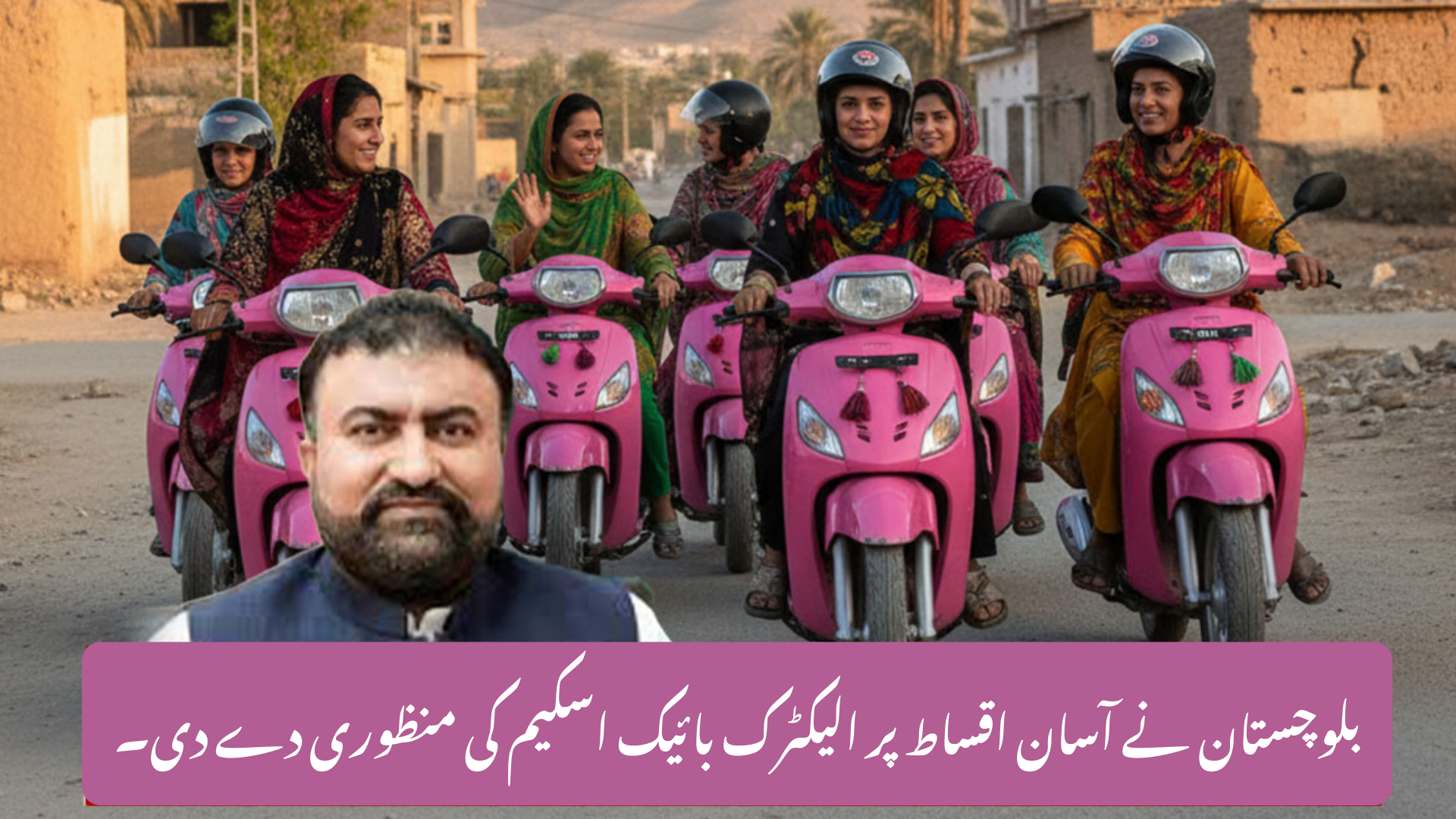

The Balochistan government has taken a major step toward affordable and eco-friendly transport by approving a new electric bike scheme on easy installments. The initiative aims to support students, working women, and government employees while reducing fuel costs and environmental pollution across the province.
The decision was approved during the 21st provincial cabinet meeting, chaired by Sarfraz Bugti. Officials described the scheme as part of a broader plan to improve daily mobility, ease financial pressure on households, and promote sustainable transport solutions in Balochistan.
Electric Bike Scheme: A Big Relief for the Public
Under the newly approved program, electric bikes will be provided to eligible citizens with a 30 percent government subsidy. The remaining cost will be paid through easy monthly installments, making electric bikes affordable for people from different income groups.
The provincial government confirmed that the scheme will be implemented through bank financing, ensuring transparency and proper oversight. This approach will also allow applicants to choose repayment plans that suit their financial capacity.
Officials emphasized that the scheme is not limited to a single group. Instead, it is designed for people from all walks of life, with special priority given to:
- Students
- Working women
- Government employees
This inclusive approach reflects the government’s focus on practical solutions for daily transportation challenges.

Why Electric Bikes Matter for Balochistan
Electric bikes offer several long-term benefits, especially for a province like Balochistan where fuel costs and travel distances are major concerns.
Lower Transport Costs
Electric bikes cost significantly less to operate compared to petrol motorcycles. With rising fuel prices, this scheme can help families save money every month.
Environment-Friendly Transport
Electric bikes produce zero emissions, helping reduce air pollution in urban areas like Quetta, Gwadar, and Turbat.
Easy Maintenance
Compared to conventional bikes, electric bikes have fewer moving parts, which means lower maintenance and repair costs.
Ideal for Daily Commuting
Students and office workers can use electric bikes for daily travel without worrying about fuel shortages or high running expenses.

Subsidy and Installment Structure Explained
One of the most attractive features of the scheme is its 30 percent subsidy. This means the government will cover nearly one-third of the total bike cost.
The remaining amount will be paid in installments through partner banks. While exact installment plans will be announced later, officials confirmed that repayment terms will be flexible and user-friendly.
This structure ensures that even low-income earners can benefit without facing financial stress.
Focus on Women and Students
The provincial cabinet highlighted that working women and students often struggle with safe and affordable transportation. Electric bikes offer a practical solution, especially for women who rely on costly ride services or unsafe travel options.
By prioritizing these groups, the government aims to:

- Improve access to education
- Support women’s participation in the workforce
- Reduce daily commuting difficulties
This move is expected to have a positive social impact beyond just transportation.
Bank Financing for Transparency and Fair Access
The decision to implement the scheme through bank financing is a key part of the plan. It ensures:
- Transparent application and approval process
- Proper verification of applicants
- Fair installment terms
- Reduced risk of misuse
Applicants will likely be required to submit basic documents, including CNIC and income details, when applying through participating banks.
Health Insurance Scheme for Government Employees
During the same cabinet meeting, officials revealed that the Balochistan government currently spends Rs. 6 to 7 billion annually on medical treatment for approximately 250,000 government employees.
To manage these rising costs, the cabinet approved the introduction of a health insurance scheme for government employees. The move is expected to:

- Reduce financial pressure on the provincial budget
- Improve access to quality healthcare
- Ensure fair and transparent medical coverage
The cabinet also ordered audits of advance medical payments and the Public Endowment Fund to improve accountability.
Expansion of the Enterprise Development Program
In addition to the electric bike initiative, the cabinet approved the expansion of the Enterprise Development Program to Gwadar, Kech, and Awaran.
This program aims to:
- Support small businesses
- Encourage local entrepreneurship
- Create employment opportunities
- Boost economic activity in underdeveloped areas
The expansion aligns with the government’s goal of balanced regional development across Balochistan.
Government’s Message on Public Trust
Chief Minister Sarfraz Bugti emphasized that public funds collected through taxes are a trust of the people. He stated that it is unfair for ordinary citizens to face hardships while resources are spent on a privileged few.

This statement reflects the administration’s intention to prioritize people-centric policies, focusing on affordability, transparency, and social justice.
Expected Impact of the Electric Bike Scheme
Once launched, the electric bike scheme is expected to deliver multiple benefits:
- Reduced fuel dependency
- Lower transportation expenses
- Increased mobility for students and women
- Environmental improvement
- Support for sustainable development
Experts believe the scheme could also encourage other provinces to adopt similar green transport initiatives.
When Will the Scheme Start?
While the cabinet has approved the plan, official registration dates and eligibility criteria are expected to be announced soon. Authorities have advised citizens to wait for formal guidelines from the provincial government and partner banks.
Conclusion
The approval of the electric bike scheme in Balochistan marks a significant step toward affordable, sustainable, and inclusive transportation. With a 30 percent subsidy, easy installment plans, and a focus on students and working women, the initiative addresses real-world challenges faced by ordinary citizens.
Combined with the introduction of a health insurance scheme and expansion of enterprise development programs, the government’s recent decisions signal a broader commitment to social welfare and economic stability in the province.