
Punjab Introduces New Mandatory Rule for Hospital Staff. The Punjab government has announced a major reform in the public healthcare system, introducing strict new rules aimed at improving transparency, discipline, and patient care in government hospitals. Under fresh directives issued by Maryam Nawaz, hospital staff will now be required to follow tighter operational standards, including the mandatory use of body cameras during duty hours.
These measures come after repeated complaints from patients regarding poor service delivery, staff behaviour, and lack of accountability in public hospitals across Punjab.
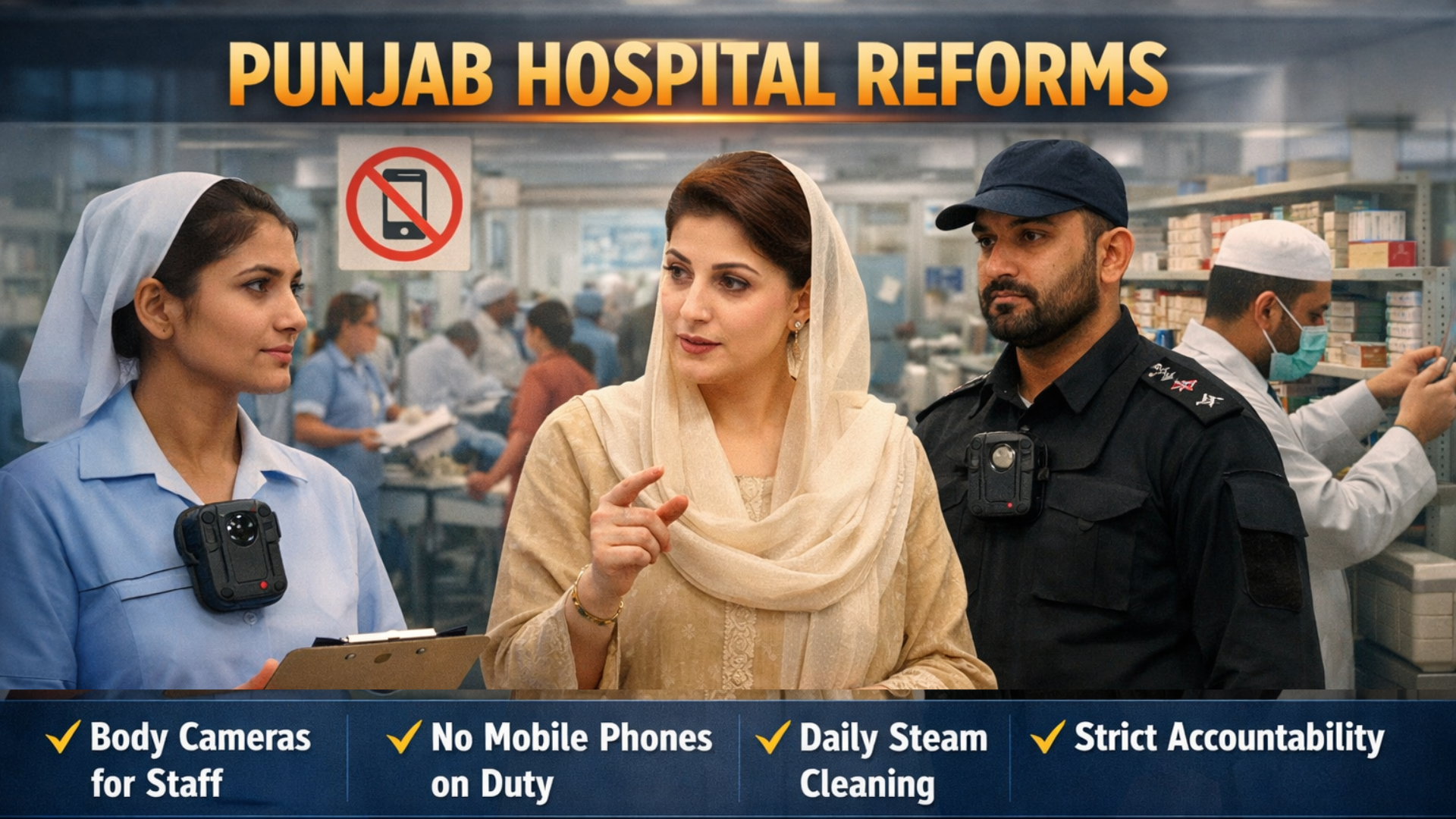
Body Cameras Made Mandatory for Public Hospital Staff
In a high-level meeting on provincial health projects, the Punjab chief minister ordered that body cameras must be worn by key hospital staff during working hours.
The rule applies to:
- Nurses
- Ward attendants
- Security personnel
- Pharmacy staff
According to the directive, body cameras will record staff interactions with patients. This footage will help hospital administrations investigate complaints, resolve disputes, and discourage misconduct.
The government believes this step will improve transparency and restore public trust in state-run hospitals.
Why the Punjab Government Introduced Body Cameras
Patient complaints have increased in recent years, especially about:

- Unprofessional staff behaviour
- Delays in treatment
- Poor communication with patients
- Lack of accountability
The use of body cameras aims to:
- Protect patients from mistreatment
- Protect staff from false allegations
- Create a documented record of service delivery
- Improve overall hospital discipline
Officials say recorded evidence will allow faster and fairer decisions when complaints arise.
Daily Steam Cleaning Ordered in Government Hospitals
To improve hygiene and infection control, the Punjab chief minister also issued strict cleanliness instructions.
All government hospitals must now:
- Complete daily steam cleaning of facilities
- Finish cleaning before 9:00 a.m. each day
This step is part of a broader effort to control infections, especially in crowded wards and emergency areas where sanitation is often a challenge.
Mobile Phone Ban for Doctors and Nurses During Duty Hours
Another major decision is the ban on mobile phone use by doctors and nurses while on duty.

The chief minister stressed that:
- Mobile phone use distracts staff
- Patient care must remain the top priority
- Emergencies require full attention
Hospital administrations have been directed to strictly enforce this rule. Exceptions may only apply for official or emergency communication.
Medical Superintendent Pool Approved With Performance-Based Incentives
To strengthen hospital leadership and management, the Punjab government approved the creation of a Medical Superintendent (MS) pool.
Key features include:
- Selection of experienced hospital administrators
- Deployment based on performance and need
- Performance-linked salary incentives
This system is designed to encourage efficiency, accountability, and results-driven management in public hospitals.
Community Health Inspectors to Monitor Hospital Services
The meeting also approved the appointment of community health inspectors.

Their responsibilities include:
- Conducting regular hospital surveys
- Monitoring staff behaviour
- Checking cleanliness and service standards
- Reporting deficiencies to higher authorities
These inspections will help the government identify problems early and ensure compliance with new rules.
Revised Medicines List for Government Hospitals
Addressing medicine shortages, the chief minister ordered the preparation of a revised medicines list for public hospitals.
A dedicated committee will:
- Review current medicine availability
- Identify essential drugs
- Finalise an updated medicines list
Despite heavy government spending on medicines, shortages have continued. The new plan aims to ensure uninterrupted supply of essential drugs for patients.
Concern Over Medicine Shortages Despite High Spending
During the meeting, the chief minister expressed serious concern over reports of drug shortages in government hospitals.

She noted that:
- Significant funds are already allocated for medicines
- Shortages indicate poor planning or mismanagement
- Patients should not suffer due to administrative failures
Authorities have been instructed to introduce a monitoring mechanism to track medicine stock levels in real time.
Health Data Analysis Center to Be Established
To evaluate the impact of health reforms, the Punjab government will establish a health sector data analysis center.
The center will:
- Analyze hospital performance data
- Measure the effectiveness of new initiatives
- Identify gaps in service delivery
- Support evidence-based decision-making
This data-driven approach aims to improve long-term healthcare planning across the province.
Zero Tolerance Policy for Negligence and Inefficiency
The chief minister made it clear that inefficiency and negligence will not be tolerated in public hospitals.

Key warnings include:
- Strict action against careless staff
- Accountability for poor management
- No leniency in cases affecting patient safety
Hospital administrations have been directed to fully implement the new rules without delay.
What This Means for Patients in Punjab
For patients, these reforms are expected to bring:
- Better staff behaviour
- Improved cleanliness
- Faster complaint resolution
- More reliable medicine availability
- Increased transparency in hospital operations
If implemented effectively, the new rules could significantly improve the patient experience in government hospitals.
Impact on Hospital Staff
Hospital staff will now be required to:
- Follow stricter discipline
- Remain fully focused during duty hours
- Adhere to cleanliness and conduct standards
- Accept monitoring through body cameras
While some staff may initially resist these changes, officials believe the measures will create a more professional healthcare environment.
Conclusion
The Punjab government’s latest healthcare reforms mark a strong push toward accountability, transparency, and improved patient care. The mandatory use of body cameras, hygiene enforcement, mobile phone restrictions, and management reforms reflect a zero-tolerance approach toward negligence in public hospitals.
If enforced consistently, these measures could set a new standard for public healthcare in Punjab and significantly restore public confidence in government hospitals.